
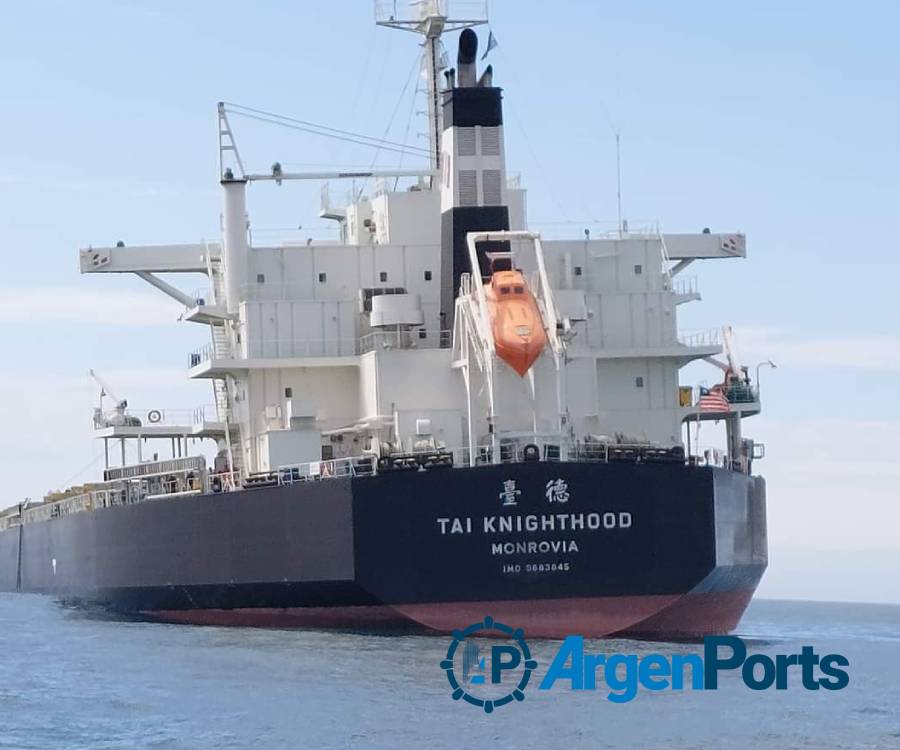
The bulk carrier that rammed the North Breakwater remains anchored off the coast of Quequén

The shipowner must submit a repair plan. Meanwhile, the Naval Prefecture continues the evaluations.

Notas relacionadas

Terminal Timbúes avanza bajo el RIGI y suma nuevos equipos para su megaproyecto sobre la Hidrovía

Aduana respaldó a los despachantes y anunció cambios en el régimen courier y la digitalización de trámites

Agregá ArgenPorts en

Writing Argenports.com

    With its load balanced and in a stable position, the ship that eleven days ago rammed the North Breakwater of Puerto Quequén, while carrying out exit maneuvers, is anchored some 5 kilometers from the Argentine coast.

    Now the shipping company must present a repair plan for the "Tai Knighthood", which suffered damage to part of its hull.

    From the Naval Prefecture it was reported that the conditions are also being evaluated to determine if the ship, which carries the Liberian flag, can re-enter the Quequén port and if the necessary safety margins under keel are met.
The ship remains anchored three miles offshore from Puerto Quequén.

The ship remains anchored three miles offshore from Puerto Quequén.

    In any case, transferring the freighter to Montevideo or Brazil for its unloading and subsequent repair of the hole that occurred on the side of the bow, when it hit the breakwater, is also being evaluated.

    Meanwhile, from that security force the investigation continues to determine what were the causes that caused the impact.

    After two days of loading in turn 3, the ship finished loading operations at 7:15 p.m. on Monday, November 28, and began unmooring at 10:20 p.m. bound for China.

    With the 47,500 tons upon arrival of the ship, plus the 25,100 tons of soybeans shipped in Puerto Quequén, the bulk carrier set sail with a total load of 72,600 tons.

    As reported by the Port Management Consortium, after the accident it was possible to close the cellar gates to prevent water leaks.

Agregá ArgenPorts en
Más vistas
junio 1, 2026

La segunda planta flotante prevista para Río Negro completó una etapa clave rumbo a la exportación de GNL

junio 17, 2026

Puerto Quequén se prepara para uno de los mayores embarques de soja de su historia

mayo 29, 2026

Australia ya es el segundo mayor destino del petróleo de Vaca Muerta exportado desde Puerto Rosales

junio 9, 2026
Entrevista exclusiva

YPF proyecta ampliar VMOS a 700.000 barriles diarios y despachar un superpetrolero cada tres días

junio 9, 2026

Más de 700 tubos partieron desde Dock Sud para la terminal offshore de VMOS

Notas relacionadas

¡Suscribite a nuestro newsletter!

Todos los martes y viernes te enviaremos a tu mail las noticias más relevantes de la semana en materia de puertos, transporte/logística, energía e industria de la Argentina.

¡Sin compromiso! Podrás darte de baja en cualquier momento.